


 一键配货
一键配货
化合物详情
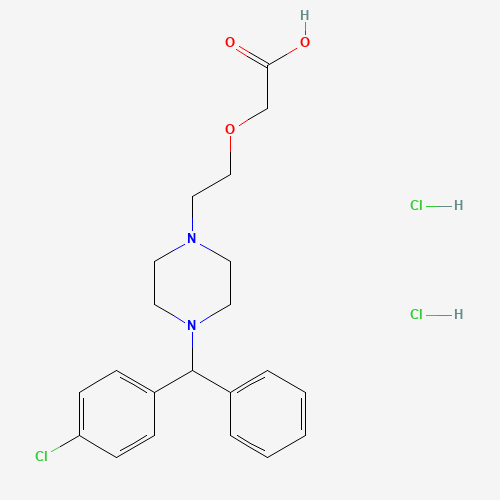
CAS83881-52-1
分子式C21H25ClN2O3 · 2HCl
分子量461.81 g/mol g/mol
危化品
Cetirizine hydrochloride is a diarylmethane.
科学粮草官-词典编辑部,修订于:2026-07-06
Toxicity
ToxicitySymptoms
Somnolence (sleepiness or unusual drowsiness), restlessness, irritability.
Treatment
Should overdose occur, treatment should be symptomatic or supportive, taking into account any concomitantly ingested medications. There is no known specific antidote to Cetirizine. (L1712)
Health Effects
Overdosage has been reported with ZYRTEC (cetirizine) . In one adult patient who took 150 mg of ZYRTEC (cetirizine), the patient was somnolent but did not display any other clinical signs or abnormal blood chemistry or hematology results. In an 18 month old pediatric patient who took an overdose of ZYRTEC (cetirizine) (approximately 180 mg), restlessness and irritability were observed initially; this was followed by drowsiness. (L1712)
Exposure Routes
Oral; mean peak plasma concentration (Cmax) of 114 ng/mL at a time (Tmax) of 2.2 hours postdose was observed for cetirizine.
Toxicity Summary
Cetirizine competes with histamine for binding at H<sub>1</sub>-receptor sites on the effector cell surface, resulting in suppression of histaminic edema, flare, and pruritus. The low incidence of sedation can be attributed to reduced penetration of cetirizine into the CNS as a result of the less lipophilic carboxyl group on the ethylamine side chain.
Carcinogen Classification
No indication of carcinogenicity to humans (not listed by IARC).
Drug Induced Liver Injury
References: DOI:10.1016/j.drudis.2016.02.015
Effects During Pregnancy and Lactation
In a study of 31 women taking cetirizine 10 mg (n = 29) or 20 mg (n = 2) daily, 10 reported a perceived decrease in milk supply over the prior 3 days.









