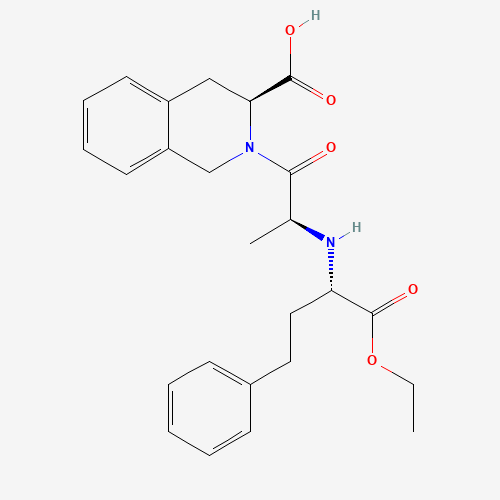
Symptoms
Overdose may lead to severe hypotension. The most common adverse effects observed in controlled clinical trials were dizziness, cough, chest pain, dyspnea, fatigue, and nausea/vomiting.
Toxicity Data
LD<sub>50</sub>=1739mg/kg (orally in mice)
Hepatotoxicity
Likelihood score: E* (unproven but suspected rare cause of clinically apparent liver injury).
Adverse Effects
FDA Safety Alert: In December 2022, quinapril (4 batches) was withdrawn from the market in a voluntary nationwide recall due to nitrosamine impurity. Nitrosamine is a potential carcinogen; in consequence, clinicians should remain cautious while prescribing.
Exposure Routes
Peak plasma concentrations of quinapril occur within one hour following oral administration. The extent of absorption is at least 60%. The rate and extent of quinapril absorption are diminished moderately (approximately 25-30%) when ACCUPRIL tablets are administered during a high-fat meal.
Toxicity Summary
There are two isoforms of ACE: the somatic isoform, which exists as a glycoprotein comprised of a single polypeptide chain of 1277; and the testicular isoform, which has a lower molecular mass and is thought to play a role in sperm maturation and binding of sperm to the oviduct epithelium. Somatic ACE has two functionally active domains, N and C, which arise from tandem gene duplication. Although the two domains have high sequence similarity, they play distinct physiological roles. The C-domain is predominantly involved in blood pressure regulation while the N-domain plays a role in hematopoietic stem cell differentiation and proliferation. ACE inhibitors bind to and inhibit the activity of both domains, but have much greater affinity for and inhibitory activity against the C-domain. Qu...
Carcinogen Classification
No indication of carcinogenicity to humans (not listed by IARC).
Drug Induced Liver Injury
References: DOI:10.1016/j.drudis.2019.09.022
Effects During Pregnancy and Lactation
◉ Effects on Lactation and Breastmilk



 一键配货
一键配货