


 一键配货
一键配货
化合物详情
CAS86050-77-3
分子式C14H20GdN3O10.2(C7H17NO5)
分子量938 g/mol
非危品
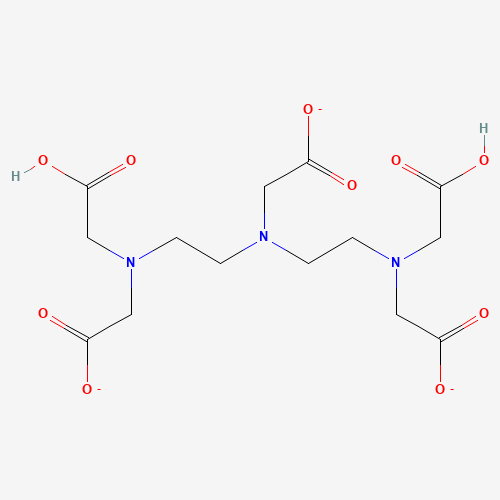
Gadopentetate dimeglumine is a gadolinium coordination entity. It has a role as a MRI contrast agent. It contains a gadopentetate.
科学粮草官-词典编辑部,修订于:2026-07-06
Toxicity
ToxicityFate Summary
TERRESTRIAL FATE: The elements of the lanthanide series typically occur as the +3 ion either in solution or in compounds(1). Based on the Gd3+/Gd reduction potential of -2.28 V(1), gadolinium(III) ions do not undergo oxidation-reduction reactions under normal environmental conditions(SRC). Gadolinium ions are likely to adsorb to soils(SRC). In general, metal cations in solution are attracted to the negatively charged surfaces of soil particles(2). The extent of adsorption of metal ions to soils depends on the pH, the mineral content, and organic content of the soil(2). Gadolinium compounds do not volatilize from dry or moist soil surfaces due to their ionic character(SRC).
Environmental Biodegradation
AEROBIC: Gadolinium-containing MRI contrast media are not biodegradable and these complexes are stable enough to pass through municipal sewage treatment plants(1).
Environmental Bioconcentration
Bioconcentration is not expected to be an important fate process due to the ionic nature of gadolinium compounds. (SRC)
Volatilization from Water / Soil
Ionic gadolinium compounds will not volatilize from dry or moist soils or from water surfaces. (SRC)
Environmental Water Concentrations
While data specific to gadopentetate dimeglumine were not located(SRC, 2007), the literature suggests that some contrast agents originating from human and veterinary therapy are not eliminated completely in municipal sewage treatment plants and are therefore discharged into receiving waters(1). Wastewater treatment processes often were not designed to remove them from the effluent(2).
Milk Concentrations
EXPERIMENTAL: Magnevist is excreted in human milk. Magnevist injection was administered intravenously to 18 lactating women with normal renal function at a dose of 0.1 mmol/kg body weight. In these women, <0.04% of the administered gadolinium was excreted into the breast milk during the 24-hour period following dosing. Breast milk obtained during the 24 hours following dosing revealed the average cumulative amount of gadolinium excreted in breast milk was 0.57 + or - 0.71 umol. The amount transferred from a 70 kg woman (receiving 0.1 mmol/kg body weight) to an infant by breast feeding over a period of 24 hrs translates into <3 umol of gadolinium.
Artificial Pollution Sources
Gadopentetate dimeglumine's use as a contrast agent in magnetic resonance imaging (MRI) may result in its release to the environment through various waste streams(SRC).
Probable Routes of Human Exposure
Occupational exposure to gadolinium compounds may occur through dermal contact with these compounds at workplaces where gadolinium is produced or used. Monitoring data indicate that the general population may be exposed to gadolinium compounds via ingestion of contaminated drinking water. Limited monitoring data indicate that exposure may occur via ingestion of contaminated food and inhalation. Direct exposure to gadolinium compounds among the general population will also be to those administered contrast agents containing gadolinium prior to MRI procedures. (SRC)
Environmental Fate / Exposure Summary
Gadopentetate dimeglumine's use as a contrast agent in magnetic resonance imaging (MRI) may result in its release to the environment through various waste streams. Gadolinium-containing MRI contrast media are not biodegradable and these complexes are stable enough to pass through municipal sewage treatment plants. Occupational exposure to gadopentetate dimeglumine may occur through dermal contact with this compounds at workplaces where it is produced or used. Direct exposure to gadopentetate dimeglumine among the general population will be to those administered contrast agents containing gadopentetate dimeglumine prior to MRI procedures. (SRC)
Interactions
... Urine and serum profiles were monitored for 24 days after iv injections of saline, diatrizoate, iohexol, gadopentetate dimeglumine, and gadodiamide in high doses (4.59 mmol/kg body weight) in rats that received a weekly intraperitoneal (ip) injection of cisplatin (1 mg/kg) for 10 weeks. There were 10 rats in each group. ... Light and electron microscopy showed severe morphologic changes, including tubular dilatation, atrophy, and necrosis induced by cisplatin; however, the contrast media did not induce any additional morphologic changes. Gadopentetate dimeglumine, diatrizoate, and iohexol significantly increased (3-20 times) albuminuria compared with iv saline in cisplatin nephropathy, whereas gadodiamide did not. Albuminuria was highest after diatrizoate injection. All four contras...
Toxicity Summary
IDENTIFICATION AND USE: Gadopentetate dimeglumine (Gd-DTPA;Magnevist) is injectable contrast medium for magnetic resonance imaging (MRI). HUMAN EXPOSURE AND TOXICITY: Gadolinium-based contrast agents (GBCAs) increase the risk for nephrogenic systemic fibrosis (NSF) among patients with impaired elimination of the drugs. Avoid use of GBCAs in these patients unless the diagnostic information is essential and not available with non-contrasted MRI or other modalities. NSF may result in fatal or debilitating fibrosis affecting the skin, muscle, and internal organs. Do not administer Magnevist to patients with: chronic, severe kidney disease, or acute kidney injury. Screen patients for acute kidney injury and other conditions that may reduce renal function. For patients at risk for chronically...
Human Toxicity Excerpts
/EPIDEMIOLOGY STUDIES/ ... A total of 924 subjects were enrolled in 10 clinical trials in which gadobenate dimeglumine (Gd-BOPTA) was compared with gadopentetate dimeglumine (Gd-DTPA). Of these subjects, 893 were patients with known or suspected disease and 31 were healthy adult volunteers. Of the 893 patients, 174 were pediatric subjects (aged two days to 17 years) referred for MRI of the brain or spine. Safety evaluations included monitoring vital signs, laboratory values, and adverse events (AE) ... The rate of AE in adults was similar between the two agents (Gd-BOPTA: 51/561, 9.1%; Gd-DTPA: 33/472, 7.0%; P = 0.22). In parallel-group studies in which subjects were randomized to either agent, the rate of AE was 10.9% for Gd-BOPTA and 7.9% for Gd-DTPA (P = 0.21). In the subset of subje...
Drug Induced Liver Injury
References: DOI:10.1016/j.drudis.2019.09.022
Non-Human Toxicity Values
LD50 Rat iv 10 mmol/kg
Non-Human Toxicity Excerpts
/LABORATORY ANIMALS: Acute Exposure/ ... Gadodiamide injection or gadopentetate dimeglumine, each at doses of 0.3 or 1.5 mmol/kg of bw, or saline volume control was administered iv in the cephalic vein of anesthetized dogs. Hemodynamic parameters, electrocardiographic parameters, and peripheral flow were measured. ... Neither the low or high dose of gadodiamide injection caused statistically significant (P<0.05) changes in any of the measured cardiovascular parameters. High doses of gadopentetate dimeglumine, however, significantly decreased left ventricular and systemic blood pressure and significantly depressed left ventricular contractility (P<0.05)...
Populations at Special Risk
In patients with renal impairment, acute renal failure (acute kidney injury) requiring dialysis or worsening renal function has occurred, mostly within 48 hours of Magnevist injection. The risk of acute renal failure is higher with increasing dose of contrast. Use the lowest possible dose, evaluate renal function in patients with renal impairment, and allow sufficient time for contrast elimination before re-administration.
Antidote and Emergency Treatment
/SRP:/ Advanced treatment: Consider orotracheal or nasotracheal intubation for airway control in the patient who is unconscious, has severe pulmonary edema, or is in severe respiratory distress. Positive-pressure ventilation techniques with a bag valve mask device may be beneficial. Consider drug therapy for pulmonary edema ... . Consider administering a beta agonist such as albuterol for severe bronchospasm ... . Monitor cardiac rhythm and treat arrhythmias as necessary ... . Start IV administration of D5W TKO /SRP: "To keep open", minimal flow rate/. Use 0.9% saline (NS) or lactated Ringer's (LR) if signs of hypovolemia are present. For hypotension with signs of hypovolemia, administer fluid cautiously. Watch for signs of fluid overload ... . Treat seizures with diazepam or lorazepam...









