


 一键配货
一键配货
化合物详情
CAS97825-25-7
分子式C18H23NO3
分子量301.38 g/mol g/mol
非危品
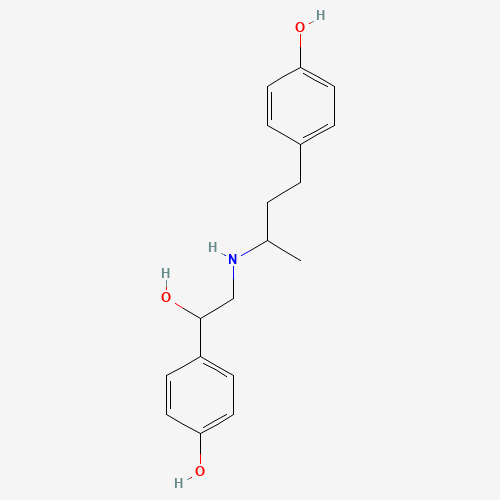
4-(1-hydroxy-2-{[4-(4-hydroxyphenyl)butan-2-yl]amino}ethyl)phenol is a secondary amino compound that is 4-(2-amino-1-hydroxyethyl)phenol in which one of the hydrogens attached to the nitrogen is replaced by a 4-(p-hydroxyphenyl)butan-2-yl group. It is a member of benzyl alcohols, a polyphenol, a secondary alcohol and a secondary amino compound.
科学粮草官-词典编辑部,修订于:2026-07-06
Toxicity
ToxicityBody Burden
The objectives of this study were to measure the residues of ractopamine in livers and kidneys of cattle (n = 6), sheep (n = 6), and ducks (n = 9) after treatment with dietary ractopamine for seven (sheep, ducks) or eight (cattle) consecutive days and to measure the depletion of ractopamine from urine of cattle and sheep. ... Analysis was performed with HPLC using fluorescence detection after liquid- (hydrolyzed samples) and(or) solid-phase extraction. No residues were detected in duck tissues. Liver residues in sheep averaged 24.0 and 2.6 ppb after 0- and 3-day withdrawal periods, respectively. Sheep liver residues after a 7-day withdrawal period were less than the limit of quantification (2.5 ppb). Sheep kidney residues were 65.1 and undetectable at 0- and at 3- and 7-day, withdrawal...
Interactions
An 8-wk study of the effects of CLA, rendered animal fats, and ractopamine, and their interactive effects on growth, fatty acid composition, and carcass quality of genetically lean pigs was conducted. Gilts (n = 228; initial BW of 59.1 kg) were assigned to a 2 x 2 x 3 factorial arrangement consisting of CLA, ractopamine, and fat treatments. The CLA treatment consisted of 1% CLA oil (CLA-60) or 1% soybean oil. Ractopamine levels were either 0 or 10 ppm. Fat treatments consisted of 0% added fat, 5% choice white grease (CWG), or 5% beef tallow (BT). The CLA and fat treatments were initiated at 59.1 kg of BW, 4 wk before the ractopamine treatments. The ractopamine treatments were imposed when the gilts reached a BW of 85.7 kg and lasted for the duration of the final 4 wk until carcass data...
Human Toxicity Excerpts
/OTHER TOXICITY INFORMATION/ The Committee reviewed publicly available literature on nontherapeutic effects in humans after long-term use of beta-adrenoceptor agonists. The reported side-effects of prolonged therapeutic use of beta-adrenoceptor agonists include tachycardia, vasodilation, skeletal muscle tremor, nervousness, metabolic disturbances (hyperglycaemia and hypokalaemia), and beta-adrenoceptor desensitization. These effects are pharmacologically predictable, dose-related and potencyrelated, with cardiovascular effects being the most commonly reported side-effects. Non-pharmacological effects include airway hyper-responsiveness and increased airway inflammation. The incidence and severity of side-effects varies for any given compound. Tolerance to pharmacologically-predictable,...
Acceptable Daily Intakes
Tolerances for residues of new animal drugs in food. The ADI for total residues of ractopamine hydrochloride is 1.25 micrograms per kilogram of body weight per day. /Ractopamine Hydrochloride/
Non-Human Toxicity Excerpts
/LABORATORY ANIMALS: Acute Exposure/ Two male and two female anesthetized rhesus monkeys (body weight, 2.5-3.5 kg; given pentobarbital at 30 mg/kg bw) were prepared for hemodynamic monitoring. The response of pulsatile arterial pressures, pulsatile aortic flow waveforms, and left ventricular pressure to a 10-min intravenous infusion of ractopamine at 35 ug/kg bw was determined. All animals survived the experimental phase of this terminal study, and no signs of toxicity were observed. Heart rate increased approximately 20% during the infusion and remained elevated throughout the 40-min monitoring period. Mean arterial pressure was maintained throughout the experiment while there was a slight augmentation of systolic pressure during the infusion. Cardiac output increased approximately 35%...
Antidote and Emergency Treatment
/SRP:/ Advanced treatment: Consider orotracheal or nasotracheal intubation for airway control in the patient who is unconscious, has severe pulmonary edema, or is in severe respiratory distress. Positive-pressure ventilation techniques with a bag valve mask device may be beneficial. Consider drug therapy for pulmonary edema ... . Consider administering a beta agonist such as albuterol for severe bronchospasm ... . Monitor cardiac rhythm and treat arrhythmias as necessary ... . Start IV administration of D5W /SRP: "To keep open", minimal flow rate/. Use 0.9% saline (NS) or lactated Ringer's if signs of hypovolemia are present. For hypotension with signs of hypovolemia, administer fluid cautiously. Watch for signs of fluid overload ... . Treat seizures with diazepam or lorazepam ... . Use...
USGS Health-Based Screening Levels for Evaluating Water-Quality
Reference: Smith, C.D. and Nowell, L.H., 2024. Health-Based Screening Levels for evaluating water-quality data (3rd ed.). DOI:10.5066/F71C1TWP









