


 一键配货
一键配货
化合物详情
CAS99755-59-6
分子式C19H25NOS
分子量315.47 g/mol g/mol
危化品
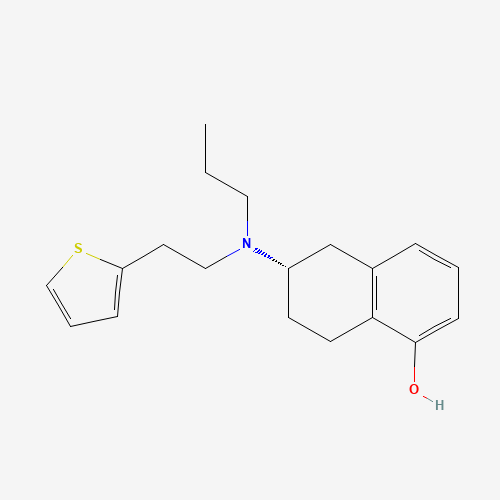
Rotigotine is a member of tetralins.
科学粮草官-词典编辑部,修订于:2026-07-06
Toxicity
ToxicityInteractions
Alcohol and other CNS depressants (e.g., sedatives, anxiolytics, antidepressants, antipsychotics, opiate analgesics) may increase the risk of additive effects, including somnolence and falling asleep during activities of daily living, in patients receiving transdermal rotigotine, and should therefore be used concomitantly with caution.
Hepatotoxicity
Likelihood score: E (unlikely cause of clinically apparent liver injury).
Toxicity Summary
IDENTIFICATION AND USE: Rotigotine is a white to off white powder formulated into a transdermal system (patch). It is a nonergot-derivative dopamine receptor agonist used for the symptomatic management of idiopathic parkinsonian syndrome. It is also used for the symptomatic management of moderate-to-severe primary restless legs syndrome. HUMAN EXPOSURE AND TOXICITY: The most likely symptoms of overdose would be those related to the pharmacodynamic profile of a dopamine agonist, including nausea, vomiting, hypotension, involuntary movements, hallucinations, confusion, convulsions, and other signs of excessive dopaminergic stimulation. Post-marketing reports indicate that patients may experience new or worsening mental status and behavioral changes, which may be severe, including psychoti...
Human Toxicity Excerpts
/SIGNS AND SYMPTOMS/ The most likely symptoms of overdose would be those related to the pharmacodynamic profile of a dopamine agonist, including nausea, vomiting, hypotension, involuntary movements, hallucinations, confusion, convulsions, and other signs of excessive dopaminergic stimulation.
Non-Human Toxicity Excerpts
/LABORATORY ANIMALS: Subchronic or Prechronic Exposure/ Continuous dopaminergic stimulation (CDS) is an important drug development strategy in the treatment of Parkinson's disease (PD). Rotigotine is a non-ergoline D(3)/D(2)/D(1) dopamine receptor agonist for treating PD. As a new treatment option for CDS, rotigotine-loaded microspheres (RoMS), long-acting sustained-release microspheres with poly(lactide-co-glycolide) as drug carrier, are now being evaluated in clinical trial. In the present study, the subchronic toxicity in Cynomolgus monkeys has been characterized via intramuscular administration with RoMS at 0, 10, 40 and 160 mg/kg, weekly for 3 months with a 1-month recovery period. The NOAEL was 10 mg/kg/week. One male at 160 mg/kg died from an extensive pulmonary embolism. The maj...
Populations at Special Risk
Patients with a major psychotic disorder should ordinarily not be treated with Neupro because of the risk of exacerbating psychosis.
Antidote and Emergency Treatment
There is no known antidote for overdosage of dopamine agonists. In case of suspected overdose, the excess transdermal system(s) should immediately be removed from the patient. Concentrations of rotigotine decrease after patch removal. The terminal half-life of rotigotine is 5 to 7 hours. The pharmacokinetic profile showed a biphasic elimination with an initial half-life of 3 hours. The patient's heart rate, heart rhythm, and blood pressure should be monitored. As shown in a study of renally impaired patients, dialysis is not expected to be beneficial. Treatment of overdose may require general supportive measures to maintain vital signs. If it is necessary to discontinue use of rotigotine after overdose, it should be discontinued gradually to prevent hyperpyrexia and confusion.
Effects During Pregnancy and Lactation
Relevant published information in nursing mothers was not found as of the revision date. Rotigotine lowers serum prolactin. The prolactin level in a mother with established lactation may not affect her ability to breastfeed.









