


 一键配货
一键配货
化合物详情
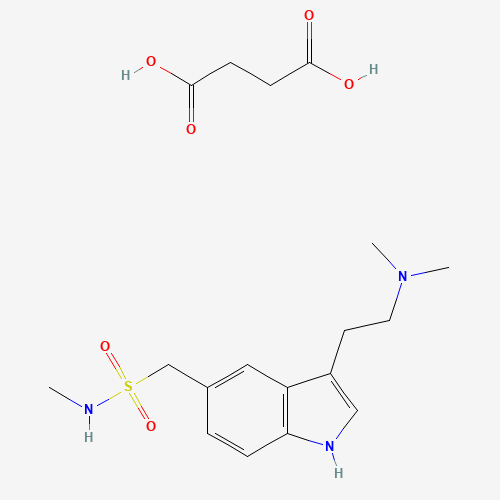
CAS103628-48-4
分子式C14H21N3O2S·C4H6O4
分子量413.49 g/mol g/mol
危化品
Sumatriptan succinate is a succinate salt obtained by reaction of sumatriptan with one equivalent of succinic acid. Selective agonist for a vascular 5-HT1 receptor subtype (probably a member of the 5-HT1D family). Used for the acute treatment of migraine with or without aura in adults. It has a role as a serotonergic agonist and a vasoconstrictor agent. It contains a sumatriptan(1+).
科学粮草官-词典编辑部,修订于:2026-07-06
Toxicity
ToxicitySymptoms
Symptoms of overdose include convulsions, tremor, paralysis, inactivity, ptosis, erythema of the extremities, abnormal respiration, cyanosis, ataxia, mydriasis, salivation, and lacrimation.
Exposure Routes
Subcutaneous, Oral, Nasal, Transdermal
Toxicity Summary
The 5-HT<sub>1B</sub> and 5-HT<sub>1D</sub> receptors function as autoreceptors, which inhibit the firing of serotonin neurons and a reduction in the synthesis and release of serotonin upon activation. After sumatriptan binds to these receptors, adenylate cyclase activity is inhibited via regulatory G proteins, incrases intracellular calcium, and affects other intracellular events. This results in vasoconstriction and inhibtion of sensory nociceptive (trigeminal) nerve firing and vasoactive neuropeptide release. Sumatriptan stimulates 5-HT receptors of the 1D subtype, most likely presynaptic receptors, resulting in selective vasoconstriction of inflamed and dilated cranial blood vessels in the carotid circulation. Sumatriptan also blocks the release of vasoactive neuropeptides from peri...
Carcinogen Classification
No indication of carcinogenicity to humans (not listed by IARC).
Drug Induced Liver Injury
References: DOI:10.1016/j.drudis.2016.02.015
Effects During Pregnancy and Lactation
A review of four European adverse reaction databases found 26 reported cases of painful, burning nipples, painful breasts, breast engorgement and/or painful milk ejection in women who took a triptan while nursing. Pain was sometimes intense and occasionally led to decreased milk production. Pain generally subsided with time as the drug was eliminated. The authors proposed that triptans may cause vasoconstriction of the arteries in the breast, nipples, and the arteries surrounding the alveoli and milk ducts, causing a painful sensation and a painful milk ejection reflex.









