


 一键配货
一键配货
化合物详情
CAS123948-87-8
分子式C23H23N3O5
分子量421.45 g/mol g/mol
危化品
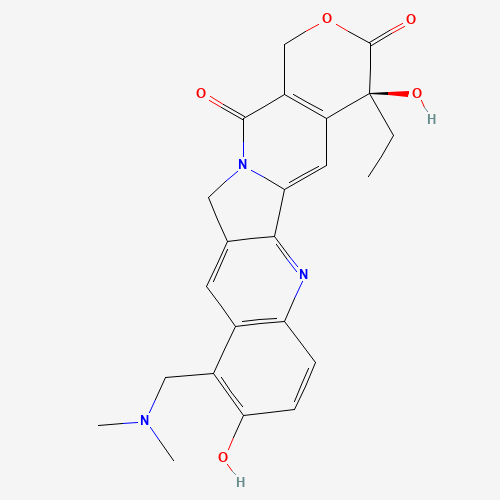
Topotecan is a pyranoindolizinoquinoline used as an antineoplastic agent. It is a derivative of camptothecin and works by binding to the topoisomerase I-DNA complex and preventing religation of these 328 single strand breaks. It has a role as an antineoplastic agent and an EC 5.99.1.2 (DNA topoisomerase) inhibitor.
科学粮草官-词典编辑部,修订于:2026-07-06
Toxicity
ToxicityMilk Concentrations
EXPERIMENTAL: In lactating rats receiving IV topotecan at a dosage of 4.72 mg/sq m, high concentrations of the drug (i.e., up to 48 times higher than plasma concentrations) were distributed into milk. It is not known whether topotecan is distributed into human milk.
Natural Pollution Sources
Topotecan is manufactured from Camptothecin, a natural plant substance found in Camptothecin acuminata (Family: Nyssaceae) and Nothapodytes nimmoniana (Synonym: Mappia foetida, Family: Icacinaceae)(1,2).
Interactions
Concurrent administration of granulocyte colony-stimulating factor (G-CSF) can prolong the duration of neutropenia associated with IV topotecan therapy. If G-CSF (filgrastim) is to be used concomitantly, therapy should be initiated 24 hours after the final dose of IV topotecan (i.e., beginning on day 6 of the 21-day treatment course for monotherapy or beginning on day 4 of the 21-day treatment course for combination therapy with IV topotecan and cisplatin).
Toxicity Summary
IDENTIFICATION AND USE: Topotecan is antineoplastic medication acting as topoisomerase I inhibitor. HUMAN EXPOSURE AND TOXICITY: The dose-limiting toxicity of topotecan is leukopenia. Topotecan-induced neutropenia can cause neutropenic colitis. Fatalities due to neutropenic colitis have been reported in clinical trials with topotecan. Overdoses (up to 10-fold of the prescribed dose) occurred in patients treated with intravenous topotecan. The primary complication of overdosage is bone marrow suppression. Interstitial lung disease (sometimes fatal) has been reported during postmarketing experience with IV topotecan. Risk factors for developing interstitial lung disease include pulmonary fibrosis, lung cancer, exposure to thoracic radiation, use of drugs known to cause pulmonary toxicity,...
Human Toxicity Excerpts
/CASE REPORTS/ Drug-induced pulmonary toxicities of anticancer agents have been well described, but the pathophysiology of agents typically used in advanced disease has not been well studied. Symptoms of pulmonary drug toxicity in advanced lung cancer patients may frequently be attributed to disease progression, pulmonary embolism, or infection. In patients with pre-existing interstitial pulmonary fibrosis even less is known. This report describes an unfortunate patient with pre-existing pulmonary fibrosis and progressive extensive stage small cell lung cancer. After receiving a single intravenous dose of topotecan, the patient developed sub-acute respiratory failure, and died 15 days later with pathology findings of organizing, reparative phase, diffuse alveolar damage. To our knowledg...
Drug Induced Liver Injury
References: DOI:10.1016/j.drudis.2019.09.022
Non-Human Toxicity Values
LD50 Mouse iv 74.85 mg/sq m (CI 95%: 47.22 to 97.41)
Non-Human Toxicity Excerpts
/LABORATORY ANIMALS: Developmental or Reproductive Toxicity/ Topotecan given to female rats prior to mating at a dose of 1.4 mg/sq m IV (about equal to the clinical dose on a mg/sq m basis) caused superovulation possibly related to inhibition of follicular atresia. This dose given to pregnant female rats also caused increased pre-implantation loss.
Populations at Special Risk
Myelosuppression, principally neutropenia, is the dose-limiting toxicity of topotecan, and use of the drug is contraindicated in patients with severe myelosuppression. Oral and IV topotecan therapy should not be initiated in patients with baseline neutrophil counts less than 1500/cu mm or platelet counts less than 100,000/cu mm.
Antidote and Emergency Treatment
/SRP:/ Immediate first aid: Ensure that adequate decontamination has been carried out. If patient is not breathing, start artificial respiration, preferably with a demand valve resuscitator, bag-valve-mask device, or pocket mask, as trained. Perform CPR if necessary. Immediately flush contaminated eyes with gently flowing water. Do not induce vomiting. If vomiting occurs, lean patient forward or place on the left side (head-down position, if possible) to maintain an open airway and prevent aspiration. Keep patient quiet and maintain normal body temperature. Obtain medical attention. /Poisons A and B/
Effects During Pregnancy and Lactation
◉ Effects on Lactation and Breastmilk









