


 一键配货
一键配货
化合物详情
CAS138495-42-8
分子式C5H2F10
分子量252.05 g/mol
非危品
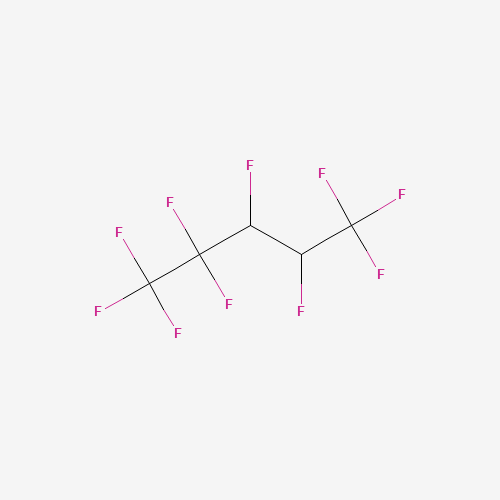
used in the formation of oxygen-carrying nanodroplets; structure in first source
科学粮草官-词典编辑部,修订于:2026-07-06
Toxicity
ToxicityFate Summary
ATMOSPHERIC FATE: According to a model of gas/particle partitioning of semivolatile organic compounds in the atmosphere(1), 2,3-dihydroperfluoropentane, which has a vapor pressure of 225.7 mm Hg at 25 °C(2), is expected to exist solely as a gas in the ambient atmosphere. Gas-phase 2,3-dihydroperfluoropentane is degraded in the atmosphere by reaction with photochemically-produced hydroxyl radicals(SRC); the half-life for this reaction in air is estimated to be 13-15 years(SRC), calculated from rate constants of 3.01X10⁻¹⁵ to 3.4X10⁻¹⁵ cu cm/molecule-sec(3,4). 2,3-Dihydroperfluoropentane has an estimated 100-year Global Warming Potential of 1500(5) and an atmospheric life-time of 15-23 years(3,5). 2,3-Dihydroperfluoropentane does not contain chromophores that absorb at wavelengths >290 nm...
Soil Adsorption / Mobility
Using a structure estimation method based on molecular connectivity indices(1), the Koc of 2,3-dihydroperfluoropentane can be estimated to be 7800(SRC). According to a classification scheme(2), this estimated Koc value suggests that 2,3-dihydroperfluoropentane is expected to be immobile in soil.
Environmental Bioconcentration
An estimated BCF of 160 was calculated in fish for 2,3-dihydroperfluoropentane(SRC), using an estimated log Kow of 3.84(1) and a regression-derived equation(1). According to a classification scheme(2), this BCF suggests the potential for bioconcentration in aquatic organisms is high(SRC), provided the compound is not metabolized by the organism(SRC).
Volatilization from Water / Soil
The Henry's Law constant for 2,3-dihydroperfluoropentane is estimated as 0.53 atm-cu m/mole(SRC) derived from its vapor pressure, 225.7 mm Hg(1), and water solubility, 140 mg/L(1). This Henry's Law constant indicates that 2,3-dihydroperfluoropentane is expected to volatilize rapidly from water surfaces(3). Based on this Henry's Law constant, the volatilization half-life from a model river (1 m deep, flowing 1 m/sec, wind velocity of 3 m/sec)(2) is estimated as 4.6 hours(SRC). The volatilization half-life from a model lake (1 m deep, flowing 0.05 m/sec, wind velocity of 0.5 m/sec)(2) is estimated as 6.3 days(SRC). However, volatilization from water surfaces is expected to be attenuated by adsorption to suspended solids and sediment in the water column. The estimated volatilization half-l...
Environmental Abiotic Degradation
The rate constant for the vapor-phase reaction of 2,3-dihydroperfluoropentane with photochemically-produced hydroxyl radicals has been reported as 3.01X10⁻¹⁵ to 3.4X10⁻¹⁵ cu cm/molecule-sec(1,2). This corresponds to an atmospheric half-life of about 13-15 years at an atmospheric concentration of 5X10+5 hydroxyl radicals per cu cm(3). 2,3-Dihydroperfluoropentane has an estimated 100-year Global Warming Potential of 1500(4) and an atmospheric life-time of 15-23 years(1,4). 2,3-Dihydroperfluoropentane is not expected to undergo hydrolysis in the environment due to the lack of functional groups that hydrolyze under environmental conditions(5). 2,3-Dihydroperfluoropentane does not contain chromophores that absorb at wavelengths >290 nm(5) and, therefore, is not expected to be susceptible to...
Atmospheric Concentrations
RURAL/REMOTE: We report in situ atmospheric measurements of hydrofluorocarbon HFC-43-10mee (C5H2F10; 1,1,1,2,2,3,4,5,5,5-decafluoropentane) from seven observatories at various latitudes, together with measurements of archived air samples and recent Antarctic flask air samples. The global mean tropospheric abundance was 0.21 +/- 0.05 ppt (parts per trillion, dry air mole fraction) in 2012, rising from 0.04 +/-0.03 ppt in 2000. We combine the measurements with a model and an inverse method to estimate rising global emissions-from 0.43 +/- 0.34 Gg/yr in 2000 to 1.13 +/-0.31 Gg/yr in 2012 (approximately 1.9 Tg CO2-eq/yr based on a 100 year global warming potential of 1660). HFC-43-10mee - a cleaning solvent used in the electronics industry - is currently a minor contributor to global radiat...
Artificial Pollution Sources
2,3-Dihydroperfluoropentane's production and use as a precision cleaning solvent for electronics(1) may result in its release to the environment through various waste streams(SRC).
Probable Routes of Human Exposure
Occupational exposure to 2,3-dihydroperfluoropentane may occur through inhalation and dermal contact with this compound at workplaces where 2,3-dihydroperfluoropentane is produced or used. (SRC)
Other Environmental Concentrations
2,3-Dihydroperfluoropentane is listed as an ingredient in three commercial/institutional aerosol cleaning products at 0-60%(1).
Environmental Fate / Exposure Summary
2,3-Dihydroperfluoropentane's production and use as a cleaning solvent may result in its release to the environment through various waste streams. If released to air, a vapor pressure of 225.72 mm Hg at 25 °C indicates 2,3-dihydroperfluoropentane will exist solely as a gas in the atmosphere. Gas-phase 2,3-dihydroperfluoropentane will be degraded in the atmosphere by reaction with photochemically-produced hydroxyl radicals; the half-life for this reaction in air is estimated to be 13-15 years. 2,3-Dihydroperfluoropentane has an estimated 100-year Global Warming Potential of 1500 and an atmospheric life-time of 15-23 years. 2,3-Dihydroperfluoropentane does not contain chromophores that absorb at wavelengths >290 nm and, therefore, is not expected to be susceptible to direct photolysis by...
Effect Level
collection=toxvaldb&kind=^EL$
Lethal Dose
collection=toxvaldb&kind=^LD$
Toxicity Data
LC50 (rat) > 4,000 ppm/2hr
Adverse Effects
Occupational hepatotoxin - Secondary hepatotoxins: the potential for toxic effect in the occupational setting is based on cases of poisoning by human ingestion or animal experimentation.
Toxicity Summary
HFC-43-10mee has a low acute inhalation toxicity. The four-hour LC50 in rats was approximately 11,000 ppm. HFC-43-10mee was not a skin or eye irritant, and was not a skin sensitizer. A cardiac sensitization response was not observed at 5000 ppm. Exposures resulted in clinical signs of neurotoxicity at concentrations of 2000 ppm and above that later resolved. No developmental or reproductive toxicity were evident at 2000 ppm, and no effects on offspring were observed. HFC-43-10mee was not genotoxic in vitro or in vivo.
Non-Human Toxicity Values
LD50 Rabbit skin >5000 mg/kg
Reference and Risk Values
collection=toxvaldb&kind=^RRV$
Non-Human Toxicity Excerpts
/OTHER TOXICITY INFORMATION/ 43-10mee is a new fluorocarbon alternative with no known ozone-depleting potential, designed for use in cleaning circuit boards. The subchronic toxicity, neurotoxicity, and teratogenicity of 43-10mee were evaluated by exposing male and female Crl:CDNBR rats to 0, 500, 2,000 or 3,500 ppm 43-10mee /by inhalarion/ for 6 hr/d, 5d/wk for 13 weeks (or gestation days 7-16). Parameters evaluated included body weight, food consumption, functional observational battery, motor activity, clinical pathology, standard pathology, and neuropathology. Additional short-term exposures were conducted at 1,000, 1,500, 2,500, and 3,000 ppm to better define NOEL for convulsive effects. Convulsions occurred during exposure at 3,500 ppm and to a minimal extent at 2,000 ppm. Convulsi...
Antidote and Emergency Treatment
/SRP:/ Advanced treatment: Consider orotracheal or nasotracheal intubation for airway control in the patient who is unconscious, has severe pulmonary edema, or is in severe respiratory distress. Positive-pressure ventilation techniques with a bag-valve-mask device may be beneficial. Consider drug therapy for pulmonary edema ... . Monitor cardiac rhythm and treat arrhythmias as necessary ... . Start IV administration of D5W TKO. Use 0.9% saline (NS) or lactated Ringer's (LR) if signs of hypovolemia are present. For hypotension with signs of hypovolemia, administer fluid cautiously. Consider vasosupressors if patient is hypotensive with a normal fluid volume. Watch for signs of cardiac irritability and fluid overload ... . Treat seizures with diazepam (Valium) or lorazepam (Ativan) ... ....









