

 一键配货
一键配货
化合物详情
CAS139264-17-8
分子式C16H21N3O2
分子量287.36 g/mol g/mol
危化品
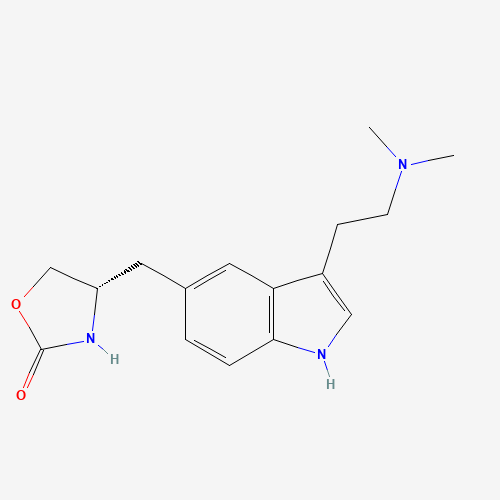
Zolmitriptan is a member of the class of tryptamines that is N,N-dimethyltryptamine in which the hydrogen at position 5 of the indole ring has been replaced by a [(4S)-2-oxo-1,3-oxazolidin-4-yl]methyl group. A serotonin 5-HT1 B and D receptor agonist, it is used for the treatment of migraine. It has a role as an anti-inflammatory drug, a serotonergic agonist and a vasoconstrictor agent. It is a member of tryptamines and an oxazolidinone. It is functionally related to a N,N-dimethyltryptamine.
科学粮草官-词典编辑部,修订于:2026-07-06
Toxicity
ToxicityTreatment
There is no specific antidote to zolmitriptan. In cases of severe intoxication, intensive care procedures are recommended, including establishing and maintaining a patent airway, ensuring adequate oxygenation and ventilation, and monitoring and support of the cardiovascular system. (L1712)
Health Effects
Serious cardiac events, including myocardial infarction migth occur. [Wikipedia]
Adverse Effects
The use of oral contraceptives among female study participants did not significantly impact the medication's efficacy or tolerability.
Exposure Routes
Topical(nasal); Oral. Mean absolute oral bioavailability is approximately 40%. Food has no affect on the rate and extent of absorption.
Toxicity Summary
Zolmitriptan binds with high affinity to human 5-HT<sub>1B</sub> and 5-HT<sub>1D</sub> receptors leading to cranial blood vessel constriction. Current theories proposed to explain the etiology of migraine headache suggest that symptoms are due to local cranial vasodilatation and/or to the release of sensory neuropeptides (vasoactive intestinal peptide, substance P and calcitonin gene-related peptide) through nerve endings in the trigeminal system. The therapeutic activity of zolmitriptan for the treatment of migraine headache can most likely be attributed to the agonist effects at the 5HT1B/1D receptors on intracranial blood vessels (including the arterio-venous anastomoses) and sensory nerves of the trigeminal system which result in cranial vessel constriction and inhibition of pro-inf...
Carcinogen Classification
No indication of carcinogenicity to humans (not listed by IARC).
Drug Induced Liver Injury
References: DOI:10.1016/j.drudis.2019.09.022
Effects During Pregnancy and Lactation
A review of four European adverse reaction databases found 26 reported cases of painful, burning nipples, painful breasts, breast engorgement and/or painful milk ejection in women who took a triptan while nursing. Pain was sometimes intense and occasionally led to decreased milk production. Pain generally subsided with time as the drug was eliminated. The authors proposed that triptans may cause vasoconstriction of the arteries in the breast, nipples, and the arteries surrounding the alveoli and milk ducts, causing a painful sensation and a painful milk ejection reflex.