


 一键配货
一键配货
化合物详情
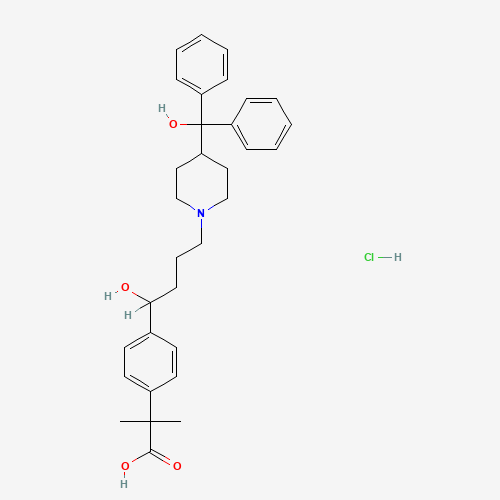
CAS153439-40-8
分子式C32H39NO4·HCl
分子量538.12 g/mol g/mol
危化品
Fexofenadine hydrochloride is a diarylmethane.
科学粮草官-词典编辑部,修订于:2026-07-06
Toxicity
ToxicitySymptoms
Side effects include dizziness, drowsiness, and dry mouth.
Treatment
In the event of overdose, consider standard measures to remove any unabsorbed drug. Symptomatic and supportive treatment is recommended. (L1712)
Exposure Routes
Oral. 33%
Toxicity Summary
Like other H1-blockers, Fexofenadine competes with free histamine for binding at H1-receptors in the GI tract, large blood vessels, and bronchial smooth muscle. This blocks the action of endogenous histamine, which subsequently leads to temporary relief of the negative symptoms (eg. nasal congestion, watery eyes) brought on by histamine. Fexofenadine exhibits no anticholinergic, antidopaminergic, alpha1-adrenergic or beta-adrenergic-receptor blocking effects.
Carcinogen Classification
No indication of carcinogenicity to humans (not listed by IARC).
Drug Induced Liver Injury
References: DOI:10.1016/j.drudis.2016.02.015
Effects During Pregnancy and Lactation
Antihistamines in relatively high doses given by injection can decrease basal serum prolactin in nonlactating women and in early postpartum women. However, suckling-induced prolactin secretion is not affected by antihistamine pretreatment of postpartum mothers. Whether lower oral doses of antihistamines have the same effect on serum prolactin or whether the effects on prolactin have any consequences on breastfeeding success have not been studied. The prolactin level in a mother with established lactation may not affect her ability to breastfeed.









