

 一键配货
一键配货
化合物详情
CAS153559-49-0
分子式C24H28O2
分子量348.48 g/mol g/mol
危化品
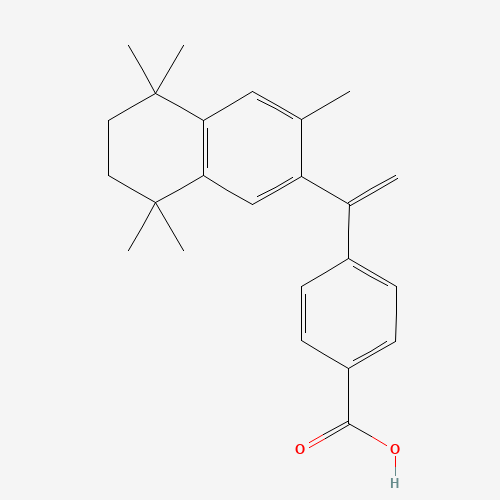
Bexarotene is a member of benzoic acids, a member of naphthalenes and a retinoid. It has a role as an antineoplastic agent.
科学粮草官-词典编辑部,修订于:2026-07-06
Toxicity
ToxicityProbable Routes of Human Exposure
/PRECAUTIONS FOR ANTINEOPLASTIC AGENTS:/ The danger to health-care personnel from handling a hazardous drug stems from a combination of its inherent toxicity and the extent to which workers are exposed to the drug in the course of carrying out their duties. This exposure may be through inadvertent ingestion of the drug on foodstuffs (eg, workers' lunches), inhalation of drug dusts or droplets or direct skin contact. /Antineoplastic agents/
Effect Level
collection=toxvaldb&kind=^EL$
Interactions
Leukopenic and/or thrombocytopenic effects of bexarotene may be increased with concurrent or recent therapy /with blood dycrasia-causing medications/ if these medications cause the same effects; dosage adjustment of the bone marrow depressant, if necessary, should be based on blood counts.
Lethal Dose
collection=toxvaldb&kind=^LD$
Hepatotoxicity
Likelihood score: D (possible but uncommon cause of clinically apparent liver injury).
Human Toxicity Excerpts
/SIGNS AND SYMPTOMS/ New cataracts or worsening of previously existing cataracts was reported in some patients, and posterior subcapsular cataracts were observed in preclinical toxicity studies in animals. Because of the high incidence of cataracts in older patients, the relationship between bexarotene use and cataract formation has not been established to date. Patients experiencing visual difficulties should have an appropriate ophthalmologic evaluation.
Drug Induced Liver Injury
References: DOI:10.1016/j.drudis.2019.09.022
Non-Human Toxicity Excerpts
/GENOTOXICITY/ Bexarotene is not mutagenic to bacteria (Ames assay) or mammalian cells (mouse lymphoma assay). Bexarotene was not clastogenic in vivo (micronucleus test in mice).
Antidote and Emergency Treatment
Advanced treatment: Consider orotracheal or nasotracheal intubation for airway control in the patient who is unconscious, has severe pulmonary edema, or is in severe respiratory distress. Positive-pressure ventilation techniques with a bag valve mask device may be beneficial. Consider drug therapy for pulmonary edema ... . Consider administering a beta agonist such as albuterol for severe bronchospasm ... . Monitor cardiac rhythm and treat arrhythmias as necessary ... . Start IV administration of D5W /SRP: "To keep open", minimal flow rate/. Use 0.9% saline (NS) or lactated Ringer's if signs of hypovolemia are present. For hypotension with signs of hypovolemia, administer fluid cautiously. Watch for signs of fluid overload ... . Treat seizures with diazepam or lorazepam ... . Use propar...