


 一键配货
一键配货
化合物详情
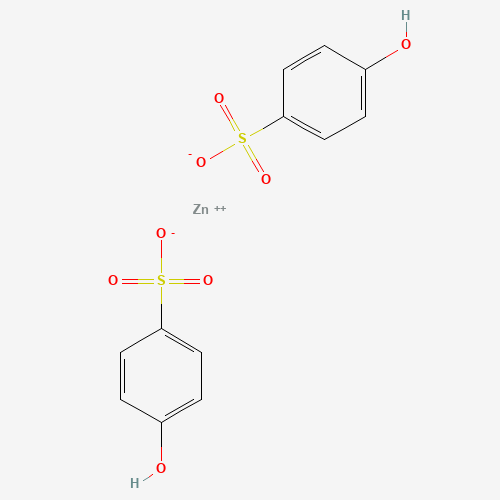
CAS127-82-2
分子式C12H10O8S2Zn
分子量411.74 g/mol
非危品
Physical Description | Zinc phenolsulfonate appears as a colorless to white crystalline solid which turns pink on exposure to air. The primary is the threat to the environment. Immediate steps should be taken to limit its spread to the environment. It is soluble in water. It is used as an insecticide and in medicine.
科学粮草官-词典编辑部,修订于:2026-07-06
Toxicity
ToxicityProbable Routes of Human Exposure
Use of zinc phenolsulfonate in therapeutic applications will result in considerable human exposure. (SRC)
Symptoms
Ingestion of large doses of zinc causes stomach cramps, nausea, and vomiting. Acute inhalation of large amounts of zinc causes metal fume fever, which is characterized by chills, fever, headache, weakness, dryness of the nose and throat, chest pain, and coughing. Dermal contact with zinc results in skin irritation. (L49)
Treatment
Zinc poisoning is treated symptomatically, often by administering fluids such as water or milk, or with gastric lavage. (L49)
Toxicity Data
LD50: 1800 mg/kg (Oral, Rat) (T14) LD50: 225 mg/kg (Intraperitoneal, Mouse) (T14)
Health Effects
Chronic exposure to zinc causes anemia, atazia, lethargy, and decreases the level of good cholesterol in the body. It is also believed to cause pancreatic and reproductive damage. (L49)
Exposure Routes
Oral (L49); inhalation (L49); dermal (L49)
Toxicity Summary
Anaemia results from the excessive absorption of zinc suppressing copper and iron absorption, most likely through competitive binding of intestinal mucosal cells. Unbalanced levels of copper and zinc binding to Cu,Zn-superoxide dismutase has been linked to amyotrophic lateral sclerosis (ALS). Stomach acid dissolves metallic zinc to give corrosive zinc chloride, which can cause damage to the stomach lining. Metal fume fever is thought to be an immune response to inhaled zinc. (L48, L49, A49)
Minimum Risk Level
Intermediate Oral: 0.3 mg/kg/day (L134) Chronic Oral: 0.3 mg/kg/day (L134)
Human Toxicity Excerpts
Subjects using 30 mM zinc phenolsulfonate as a mouthwash retained 12% of the zinc. Salivary zinc concn was increased using mouthwashes containing 17-35 mM zinc as zinc sulfonate, zinc phenolsulfonate, or zinc citrate. At 17 mM, the effect lasted 3-4 hr. Zinc retained in the mouth gave visible fluorescence after rinsing with 8-hydroxyquinoline, and this was particularly evident on the tongue, cheek mucosa, and dental plaque. The concn of zinc in plaque was increased 13 19 fold 1 hr after using 31 or 18 mM zinc phenolsulfonate. The effect of zinc on the metabolic activity of plaque may reduce the growth rate of plaque bacteria and so decrease plaque growth.
Carcinogen Classification
No indication of carcinogenicity to humans (not listed by IARC).
Non-Human Toxicity Values
LD50 ip Mouse 225 mg/kg
Non-Human Toxicity Excerpts
EXPERIMENTAL APPLICATION OF THIS SOLN /3% ZINC PHENOLSULFONATE/ EIGHT TIMES TO EYE OF RABBIT CAUSED CORNEA TO BECOME COMPLETELY OPAQUE IN SEVEN DAYS.
Antidote and Emergency Treatment
Advanced treatment: Consider orotracheal or nasotracheal intubation for airway control in the patient who is unconscious. Early intubation at the first sign of upper airway obstruction may be necessary. Monitor cardiac rhythm and treat arrhythmias if necessary ... . Start an IV with D5W TKO /SRP: "To keep open", minimal flow rate/. Use lactated Ringer's if signs of hypovolemia are present. Watch for signs of fluid overload. Consider drug therapy for pulmonary edema ... . Treat seizures with diazepam (Valium) ... . For hypotension with signs of hypovolemia, administer fluid cautiously. Consider vasopressors for hypotension with a normal fluid volume. Watch for signs of fluid over load ... . Use proparacaine hydrochloride to assist eye irrigation ... . /Sulfur and related compounds/









