

 一键配货
一键配货
化合物详情
CAS10380-29-7
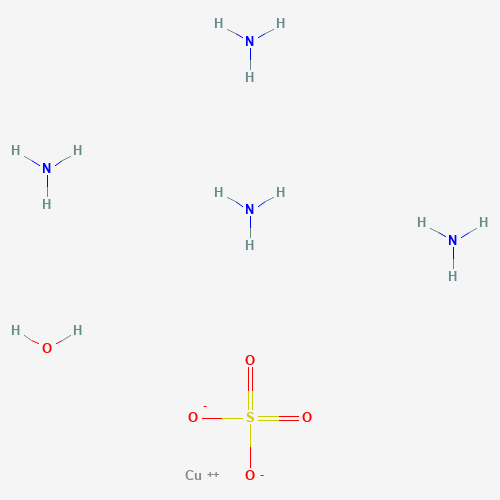
分子式Cu(NH3)4SO4·H2O
分子量245.75 g/mol g/mol
危化品
Physical Description | Cupric sulfate, ammoniated appears as a dark blue crystalline solid with a faint odor of ammonia. The primary hazard is the threat to the environment. Immediate steps should be taken to limit its spread to the environment. Used as a pesticide, to print fabrics, and to make other copper compounds.
科学粮草官-词典编辑部,修订于:2026-07-06
Toxicity
ToxicitySymptoms
Breathing high levels of copper can cause irritation of the nose and throat. Ingesting high levels of copper can cause nausea, vomiting, diarrhea, headache, dizziness, and respiratory difficulty. (L278, L279)
Treatment
EYES: irrigate opened eyes for several minutes under running water. INGESTION: do not induce vomiting. Rinse mouth with water (never give anything by mouth to an unconscious person). Seek immediate medical advice. SKIN: should be treated immediately by rinsing the affected parts in cold running water for at least 15 minutes, followed by thorough washing with soap and water. If necessary, the person should shower and change contaminated clothing and shoes, and then must seek medical attention. INHALATION: supply fresh air. If required provide artificial respiration.
Health Effects
People must absorb small amounts of copper every day because copper is essential for good health, however, high levels of copper can be harmful. Very-high doses of copper can cause damage to your liver and kidneys, and can even cause death. Copper may induce allergic responses in sensitive individuals. (L278, L279)
Exposure Routes
Oral (L277); inhalation (L277); dermal (L277)
Toxicity Summary
Excess copper is sequestered within hepatocyte lysosomes, where it is complexed with metallothionein. Copper hepatotoxicity is believed to occur when the lysosomes become saturated and copper accumulates in the nucleus, causing nuclear damage. This damage is possibly a result of oxidative damage, including lipid peroxidation. Copper inhibits the sulfhydryl group enzymes such as glucose-6-phosphate 1-dehydrogenase, glutathione reductase, and paraoxonases, which protect the cell from free oxygen radicals. It also influences gene expression and is a co-factor for oxidative enzymes such as cytochrome C oxidase and lysyl oxidase. In addition, the oxidative stress induced by copper is thought to activate acid sphingomyelinase, which lead to the production of ceramide, an apoptotic signal, as...
Minimum Risk Level
Acute Oral: 0.01 mg/kg/day (L134) Intermediate Oral: 0.01 mg/kg/day (L134)
Carcinogen Classification
No indication of carcinogenicity to humans (not listed by IARC).