

 一键配货
一键配货
化合物详情
CAS13478-50-7
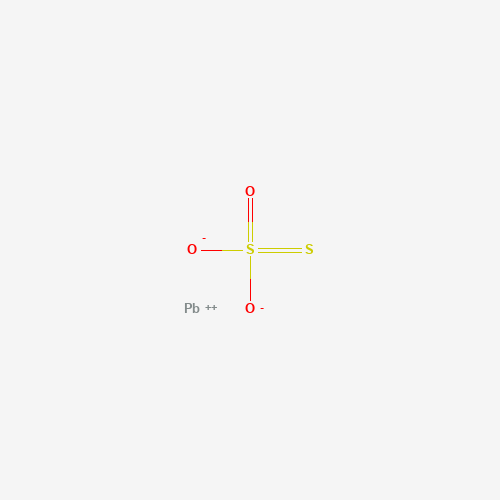
分子式O3PbS2
分子量319.3282 g/mol
非危品
Physical Description | Lead thiosulfate is a white crystalline solid. Sinks and mixes slowly with water. (USCG, 1999)
科学粮草官-词典编辑部,修订于:2026-07-06
Toxicity
ToxicityNatural Pollution Sources
Extent of occurrence of /lead/ in earth's crust is about 15 g/ton, also expressed as 0.002% (depth of crust: 16 km). Occurs chiefly as sulfide in galena, other minerals include anglesite (PbSO4), cerussite (PbCO3), mimetite (PbCl2.3Pb3-(AsO4)2) and pyromorphite [PbCl2.3Pb3(PO4)2)].
Symptoms
Symptions of chronic lead poisoning include reduced cognitive abilities, nausea, abdominal pain, irritability, insomnia, metal taste in the mouth, excess lethargy or hyperactivity, chest pain, headache and, in extreme cases, seizures, comas, and death. There are also associated gastrointestinal problems, such as constipation, diarrhea, vomiting, poor appetite, weight loss, which are common in acute poisoning. (A2, L21)
Treatment
Lead poisoning is usually treated with chelation therapy using DMSA, EDTA, or dimercaprol. (L21)
Health Effects
Lead is a neurotoxin and has been known to cause brain damage and reduced cognitive capacity, especially in children. Lead exposure can result in nephropathy, as well as blood disorders such as high blood pressure and anemia. Lead also exhibits reproductive toxicity and can results in miscarriages and reduced sperm production. (L21)
Adverse Effects
ACGIH Carcinogen - Confirmed Animal.
Exposure Routes
Oral (L136); inhalation (L136); dermal (L136)
Toxicity Summary
Lead mimics other biologically important metals, such as zinc, calcium, and iron, competing as cofactors for many of their respective enzymatic reactions. For example, lead has been shown to competitively inhibit calcium's binding of calmodulin, interferring with neurotransmitter release. It exhibits similar competitive inhibition at the NMDA receptor and protein kinase C, which impairs brain microvascular formation and function, as well as alters the blood-brain barrier. Lead also affects the nervous system by impairing regulation of dopamine synthesis and blocking evoked release of acetylcholine. However, it's main mechanism of action occurs by inhibiting delta-aminolevulinic acid dehydratase, an enzyme vital in the biosynthesis of heme, which is a necesssary cofactor of hemoglobin. (...
Minimum Risk Level
Chronic Inhalation: 0.05 mg/m3 (L134)
Acceptable Daily Intakes
0.007 mg/kg (WHO) /Lead; from table/
Carcinogen Classification
2A, probably carcinogenic to humans. (L135)
Evidence for Carcinogenicity
Lead, lead compounds: Reasonably anticipated to be a human carcinogen