
化合物详情

CAS542-11-0
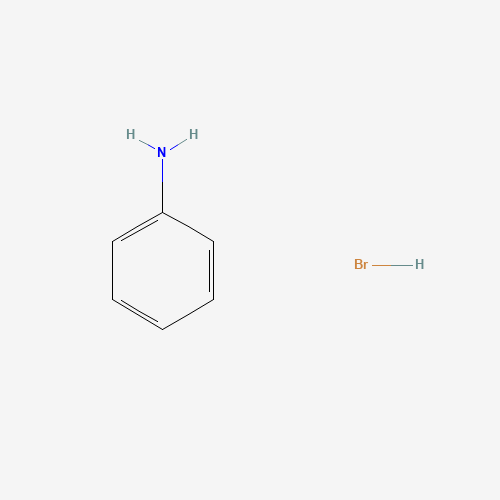
分子式C6H7N·HBr
分子量174.04 g/mol g/mol
危化品

Aniline is an organic chemical compound, specifically a primary aromatic amine. It consists of a benzene ring attached to an amino group. Aniline is oily and, although colorless, it can be slowly oxidized and resinified in air to form impurities which can give it a red-brown tint. Its boiling point is 184 degree centigrade and its melting point is -6 degree centegrade. It is a liquid at room temperature. Like most volatile amines, it possesses a somewhat unpleasant odour of rotten fish, and also has a burning aromatic taste; it is a highly acrid poison. It ignites readily, burning with a large smoky flame. Aniline reacts with strong acids to form salts containing the anilinium (or phenylammonium) ion (C6H5-NH3+), and reacts with acyl halides (such as acetyl chloride (ethanoyl chloride),...

科学粮草官-词典编辑部,修订于:2026-07-06
化合物详情

Toxicity

Toxicity
4
Symptoms
Aniline-induced splenic toxicity is characterized by hemorrhage, capsular hyperplasia, fibrosis, and a variety of sarcomas in rats.
Exposure Routes
Toxic by ingestion and a skin and eye irritant.
Toxicity Summary
Aniline induces lipid peroxidation and protein oxidation in the spleen and that oxidative stress plays a role in the splenic toxicity of aniline. The hematopoietic system is the primary target of aniline insult in rats which is characterized by methemoglobinemia, hemolysis, and hemolytic anemia and by the development of splenic hyperplasia, siderosis, fibrosis, a variety of sarcomas, and, most commonly, fibrosarcomas on prolonged exposure. Many of the characteristics of splenotoxicity in rats, such as hyperplasia, hyperpigmentation, and/or formation of highly malignant tumors such as fibrosarcomas, are not restricted to aniline exposure, but also occur when animals are exposed to substituted anilines such as chloroaniline. Studies with aniline hydrochloride in rats indicate an associati...
Carcinogen Classification
3, not classifiable as to its carcinogenicity to humans. (L135)
客服