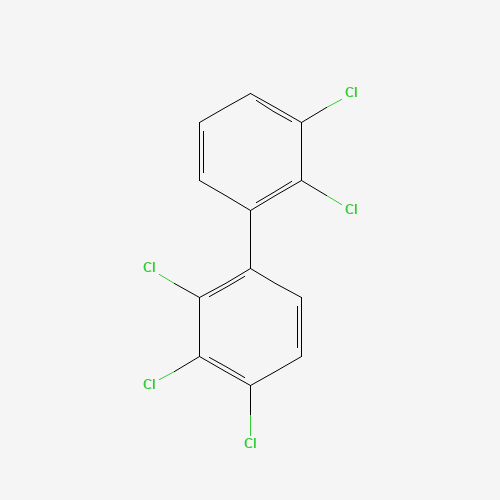
Body Burden
The relationships among serum polychlorinated biphenyls (PCBs) concentration, serum lipids concentration, and adipose tissue PCBs concentration were studied in humans. Fasting blood samples were obtained from 173 capacitor workers with direct occupational exposure to Aroclor-1254 (11097-69-1), Aroclor-1242 (53469-21-9), and Aroclor-1260 (11096-82-5). Serum was analyzed for PCBs, albumin, triglycerides, and cholesterol. Serum PCBs ranged from 12 to 392 parts per billion (ppb) for Aroclor-1242 and 4 to 129 ppb for Aroclor 1254 and 1260. Serum concn of PCBs were significantly dependent on serum concn of lipids, but not of albumin. The apparent contribution of cholesterol and its esters to PCB transport was nearly equal to their contribution to the total serum neutral lipids present.
Ecotoxicity Values
USDA APHIS Chemical Effects: collection=usda_chemeffect&query_type=synonym&query='^11097-69-1$'
Fate Summary
ATMOSPHERIC FATE: Aroclor 1254 is a mixture of chlorinated biphenyls with the approximate distribution as follows: <0.1% di-, 1.8% tri-, 17.1% tetra-, 49.3% penta-, 27.8% hexa-, 3.9% hepta-, <0.05% octa-, and <0.05% nonachlorobiphenyl(1). According to a model of gas/particle partitioning of semivolatile organic compounds in the atmosphere(2), Aroclor 1254, which has a vapor pressure of 7.71X10⁻⁵ mm Hg at 25 °C(3), will exist in both the vapor and particulate phases in the ambient atmosphere. Vapor-phase Aroclor 1254 is degraded in the atmosphere by reaction with photochemically-produced hydroxyl radicals(SRC); the half-life for this reaction in air is estimated to range from 22 to 79 days(SRC), calculated from a rate constant range for these congeners of 2.0X10⁻¹³ to 7.6X10⁻¹³ cu cm/mo...
Soil Adsorption / Mobility
Soil Rf values of 0.02-0.04, which are indicative of soil immobility, were measured for Aroclor 1254 in Ottawa sand, Catlin loam, Ava silty clay loam and Catlin silt loam using both water and a landfill leachate(1). A review of experimental Koc values has reported Aroclor 1254 log Koc values ranging from 5.0 to 6.1(2) and a Koc of 42,500 was also reported(3). Less than 0.01% of a 20 ppm solution of Aroclor 1254 had leached through 7.6 cm of a Lakeland sand(4). Studies using aqueous Aroclor 1254 and sand, silica gel, various clays and a silty loam soil (3.1% organic matter, 16.6% clay) as adsorbents indicated a greater affinity of the PCB for the soil(4). It was proposed that this was due to the organic matter (OM) present in the loam soil(4). When aqueous Aroclor 1254 was adsorbed to ac...
Environmental Biodegradation
ANAEROBIC: The reductive dechlorination of Aroclor 1254 by microorganisms obtained from Hudson River sediments was investigated(1). Over the course of 24 months, the rate, extent and pathway of dechlorination were compared in biphenyl-enriched and non-enriched sediments. Within the first 5 months, approximately 30% of the total chlorines were removed in both treatments. After 5 months, dechlorination of the PCBs decreased such that by the end of the 24 months, only an additional 8 and 2% of the total chlorines were removed in the non enriched and biphenyl-enriched sediments, respectively(1). Dechlorination occurred primarily at the meta position relative to the biphenyl linkage for both experimental conditions(1). Aroclor 1254 was biodegraded 50% in 24 weeks at 30 °C in lake sediments;...
Environmental Bioconcentration
Freshwater prawns, Macrobrachium rosenbergii, and clams, Corbicula fluminea, were exposed for 48 or 50 days to 3 concentrations of a river sediment, sampled from the Sheboygan River, Wisconsin, that contained environmental contaminants such as PCBs and metals. Prawns were exposed to sediment collected in May 5 1980, which contained higher concentrations of some metals and PCBs compared to sediment from Nov 1980, used with the clams. The highest concentration of sediment from May of 1980 was toxic to the prawns; sediment from Nov of 1980 was not toxic to the clams. Tissue analyses of prawns for Aroclor 1254 demonstrated bioaccumulation. The PCB sediment bioaccumulation factors (BAF) for prawns ranged from 0.20 to 2.40 for Aroclor 1254, and were highest for animals exposed to 10% sediment...
Volatilization from Water / Soil
Vapor loss of Aroclor 1254 from clay soil was negligible over a 4 week period, but vapor loss from sand varied from 10-75% over the same period with evaporation of the lower chlorinated cogeners occurring at the faster rates(1). Vapor loss of Aroclor 1254 from three different soils was observed to be 40-50% over 2-4 months(2). Volatilization was observed to be the major process by which Aroclor 1254 was lost from three unamended calcareous soils from New Mexico during 240 days of monitoring; amending the soils with sewage sludge decreased the rate of volatilization(3).
Environmental Abiotic Degradation
To facilitate the photolysis of PCBs, researchers studied the degradation rate in the presence of sodium borohydride. Solutions of Aroclors in 90% acetonitrile/water were irradiated under nitrogen at 254 nm. Without the presence of sodium borohydride, 25% of Aroclor 1254 reacted (lost at least one chlorine atom) after approximately 8 hrs while 10% of Aroclor 1260 reacted in about 1 hr and appeared to remain stable. In the presence of sodium borohydride, 100% of Aroclor 1254 reacted in 16 hrs while 73% of Aroclor 1260 reacted within 120 minutes.
Environmental Water Concentrations
RAIN/SNOW: A review of Aroclor 1254 levels found in rain and snow from the United States has reported levels of <1-49 ng/L in rain and 24-76 ng/L in snow(1). Levels up to 158 ng/L (1975-78) found in Canada, USA and Europe with levels decreasing to 1986 (PCBs)(2).
Food Survey Values
In the 1970s, high concentrations began to appear in dairy products and packaged foods due to a compound called Cumar. Cumar contained approximately 18% Aroclor 1254 and was the major source of PCB dairy product contamination as a result of its use to treat silos. Packaged foods were contaminated as a result of PCBs leaching or migrating from the paperboard boxes and liners manufactured from recycled paper, such as self-duplicating copy paper, containing PCBs(1).
Milk Concentrations
EXPERIMENTAL: In one study, 3 groups of cows were fed different diets with and without Aroclor 1254 contamination. One group received non-contaminated corn silage, another was fed corn silage from a silo that had been treated with a sealant containing Aroclor 1254, while the third group was fed silage that was contaminated directly with Aroclor 1254. Analyses of milk samples over a 164 lactation period revealed that milk from the cows which were fed uncontaminated silage contained 0.69-1.50 ppm PCB on a fat basis while milk from cows fed silage from the sealant-coated silo contained 15.7-18.4 ppm PCB for approximately 1 month. The third group of cows fed corn silage directly contaminated with Aroclor 1254 had concentrations ranging from 119-159 ppm PCB in milk fat for the initial month...
Plant Concentrations
Aroclor 1254 levels of < 0.1-0.74 ppm were found in pollen and propolis collected in 1985 at various NY State sites near honeybee hives(1). Purple loosestrife in Hudson River basin absorbed PCBs from contaminated soil in 1986 and emitted the lowest chlorinated PCBs (most volatile) during transpiration(2). Aroclor 1254 was detected in 100% of Ceratophylum demerrsum, Lemna Spp and Potamogeton pictinatus at 17.12-48.8, 7.12-10.12 and 4.84-12.13 ng/g wet weight, respectively, in plants sampled 1997 to 1998 from the aquatic ecosystem of Lake Manzala, Egypt(3).
Animal Concentrations
Aroclor 1254/1260 was detected in 79 mink livers from 15 locations, sampled 1988 to 1989 in southern Ontario at 34-1797 ug/kg wet weight(1).
Effluent Concentrations
An assessment of the USEPA STORET Database found Aroclor 1254 detected in 1.8% of 714 observation stations(1). The concentration of Aroclor 1254 found in the leachate from a hazardous waste landfill was 70 ppb(2). Aroclor 1254 has been detected in incinerator emissions after burning municipal refuse and sewage sludge(3).
ICSC Environmental Data
Bioaccumulation of this chemical may occur in aquatic organisms. It is strongly advised not to let the chemical enter into the environment.
Atmospheric Concentrations
RURAL/REMOTE: Concentrations of 0.06, 0.69, 0.40 and 0.41 ng/cu m were found at Enewetak Atoll (N. Pacific), in the North Atlantic, in the Gulf of Mexico, and at Pigeon Key, FL(1). Aroclor 1254 concentrations of 12, 12, and 5 pg/cu m were found in the S. Pacific atmosphere of Amer Samoa, Peru (coast), and New Zealand, respectively(2). Aroclor 1254 was detected in gas and aerosol form at 21-456 and 13-46 pg/cu m in 6 samples taken in 2001 and at 326-819 and 19-28 pg/cu m in 3 samples taken in 2002 from Banyuls-Sur-Mer, France(3).
Fish/Seafood Concentrations
Edible fish species were collected from 13 locations throughout San Francisco Bay, during the spring of 1994 to determine the level of PCB contamination in muscle tissue(1). Southern California white croaker had muscle tissue concentrations of total PCBs (sum of Aroclors 1254 and 1260) which ranged from 1 ng/g at Dana Point to 757 ng/g at Malibu. Sums of Aroclors 1254 and 1260 in muscle tissue of white croaker from San Francisco Bay ranged from 137 to 613 ng/g. Stations nearest Oakland's and San Francisco's industrial areas exhibited the highest PCB values in the Bay area(1). A monitoring study, conducted from 1975-1980, of finfish and shellfish from New Jersey revealed that 75% and 50%, respectively, contained detectable levels of Aroclor 1254(2). A typical sample of fish from Upper Au...
Artificial Pollution Sources
Since October of 1977, Aroclor 1254 (comprised of approximately: <0.1% di-, 1.8% tri-, 17.1% tetra-, 49.3% penta-, 27.8% hexa-, 3.9% hepta-, <0.05% octa-, and <0.05% nonachlorobiphenyl)(1) has not been produced in the United States(2). Current sources of PCB release to the environment include releases from landfills containing PCB waste materials and products, incineration of municipal refuse and sewage sludge, and inappropriate (or illegal) disposal of PCB materials, such as waste transformer fluid, to open areas(3,4). PCBs can also be found in older transformers and capacitors still in use that have not been replaced with PCB-free dielectric fluid. Monitoring of atmospheric emissions of PCBs from landfills and incinerator stacks has indicated that emission rates from these sources are...
Sediment/Soil Concentrations
SOIL: Aroclor 1254 was detected in three of three soil samples at 7.2-27 ng/g dry weight, taken from three farms, Sept 1996, in Chinandega, Nicaragua(1).
Probable Routes of Human Exposure
NIOSH (NOES Survey 1981-1983) has statistically estimated that 3702 workers (1725 of these were female) were potentially exposed to Aroclor 1254 in the US(1). Dermal exposure is important for workers involved with handling PCB-containing electrical equipment, spills or waste-site materials and for swimmers in polluted water(2). The major exposure routes to the general population are through food and drinking water, and by inhalation of contaminated air(2). Exposure through consumption of contaminated fish may be especially important to the general public(3). The potential levels of PCBs, such as Aroclor 1254, in indoor air may be from 2 to 10 times higher than typical levels found in outdoor air due in part to the presence of PCB-containing transformers and electrical parts(4).
Other Environmental Concentrations
The contamination of a multibuilding facility (total of 32 buildings) through the improper incineration of PCBs was investigated. The study found that the extent of PCB contamination was widespread. Total PCB concentrations (sum of Aroclor 1254 and 1260) ranged from 0.005 to 530 mg/sq m from surface wipe samples taken from each building (total of 9). Dust samples taken from 11 of the buildings had PCB concentrations(sum of Aroclor 1254 and 1260) ranging from 4.3 to 1400 ug/g(1). The average concentration of PCBs (sum of Aroclor 1254 and 1260) in the 32 buildings ranged from <0.01 to 121 mg/sq m(1). Aroclor 1254 was detected in 7 of 24 buildings in the Boston metro area, in caulking at 0.56-35,600 ppm from a study done Aug and Sept 2003(2).
Environmental Fate / Exposure Summary
Since October of 1977, Aroclor 1254 has not been produced commercially in the United States. Current evidence suggests that the major source of Aroclor 1254 release to the environment is through an environmental cycling process of Aroclor 1254 previously introduced into the environment. This cycling process involves volatilization from ground surfaces (water, soil) into the atmosphere with subsequent removal from the atmosphere via wet/dry deposition and then revolatilization. PCBs, such as Aroclor 1254, are also currently released to the environment from landfills containing PCB waste materials and products, incineration of municipal refuse and sewage sludge, and improper (or illegal) disposal of PCB materials, such as waste transformer fluid, to open areas. PCBs can also be found in o...
Symptoms
Chronic PCB exposure results in symptoms such as abdominal pain, nausea, vomiting, diarrhea, headache, dizziness, depression, nervousness, dermal and ocular lesions, fatigue, irregular menstrual cycles and a lowered immune response. (A3)
Treatment
There are no specific treatments for PCB poisoning, since it is not usually recognized until after substantial chronic exposure. Only preventing further exposure and treating the observed symptoms can be done. Acute inhalation can be treated by administering oxygen. (L4)
Cancer Sites
[in animals: tumors of the pituitary gland & liver, leukemia]
Target Organs
Skin, eyes, liver, reproductive system
Toxicity Data
LD50: 1010 mg/kg (Oral, Rat) (L135) LD50: 358 mg/kg (Intravenous, Rat) (L135) LD50: 880 mg/kg (Intraperitoneal, Rat) (L135)
Health Effects
The most common health effects of PCBs are skin conditions such as chloracne and rashes. Chronic PCB exposure has also been shown to cause liver, stomach and kidney, damage, jaundice, edema, anemia, changes in the immune system, behavioral alterations, and impaired reproduction. (L4)
Adverse Effects
ACGIH Carcinogen - Confirmed Animal.
Exposure Routes
Oral (L4); inhalation (L4); dermal (L4)
Toxicity Summary
The mechanism of action varies with the specific PCB. Dioxin-like PCBs bind to the aryl hydrocarbon receptor, which disrupts cell function by altering the transcription of genes, mainly be inducing the expression of hepatic Phase I and Phase II enzymes, especially of the cytochrome P450 family. Most of the toxic effects of PCBs are believed to be results of Ah receptor binding. Other PBCs are believed to interfere with calcium channels and/or change brain dopamine levels. PCBs can also cause endocrine disurption by altering the production of thyroid hormones and binding to estrogen receptors, which can stimulate the growth of certain cancer cells and produce other estrogenic effects, such as reproductive dysfunction. They will bioaccumulate by binding to receptor proteins such as uterog...
CDC-ATSDR Toxicological Profile
Minimum Risk Level
Intermediate Oral: 0.03 ug/kg/day (L134)
RAIS Toxicity Values
Oral Slope Factor Reference: SURROGATE. See Polychlorinated Biphenyls
Carcinogen Classification
1, carcinogenic to humans. (L135)
1 or Cancer Risk Level 1E-06
Fraction of Contaminant Absorbed Dermally from Soil: 0.14000000000000001
Evidence for Carcinogenicity
Polychlorinated Biphenyls (PCBs): reasonably anticipated to be human carcinogens. /Polychlorinated Biphenyls (PCBs)/
Antidote and Emergency Treatment
Advanced treatment: Consider orotracheal or nasotracheal intubation for airway control in the patient who is unconscious or is in severe respiratory distress. Monitor cardiac rhythm and treat arrhythmias if necessary ... . Start IV administration of D5W /SRP: "To keep open", minimal flow rate/. Watch for signs of fluid overload ... . Use proparacaine hydrochloride to assist eye irrigation ... . /PCBs, PBBs, PCDFs, and Related Compounds/
Hazard Quotient Level 3 or Cancer Risk Level 1E-04
Fraction of Contaminant Absorbed Dermally from Soil: 0.14000000000000001
USGS Health-Based Screening Levels for Evaluating Water-Quality
Reference: Smith, C.D. and Nowell, L.H., 2024. Health-Based Screening Levels for evaluating water-quality data (3rd ed.). DOI:10.5066/F71C1TWP



 一键配货
一键配货